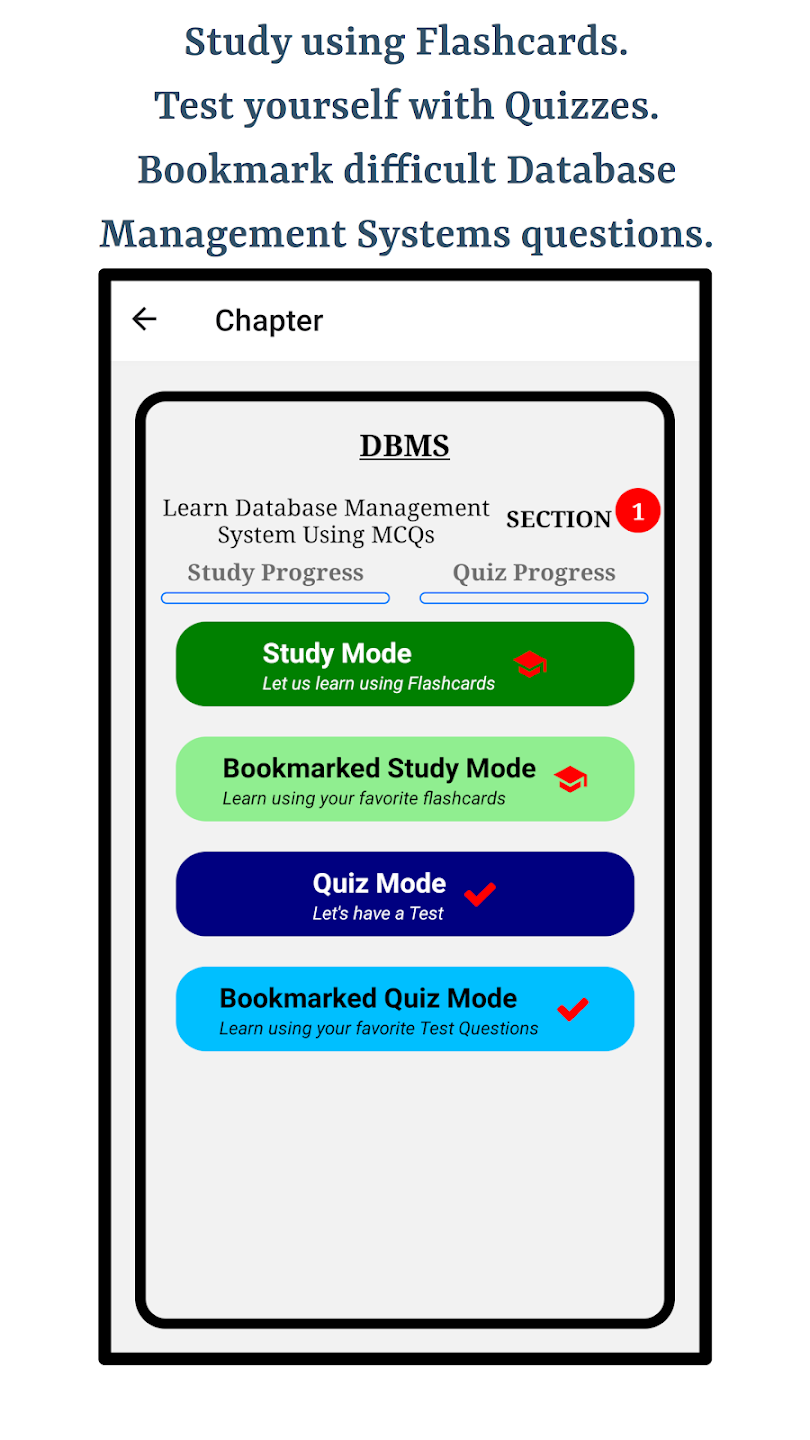
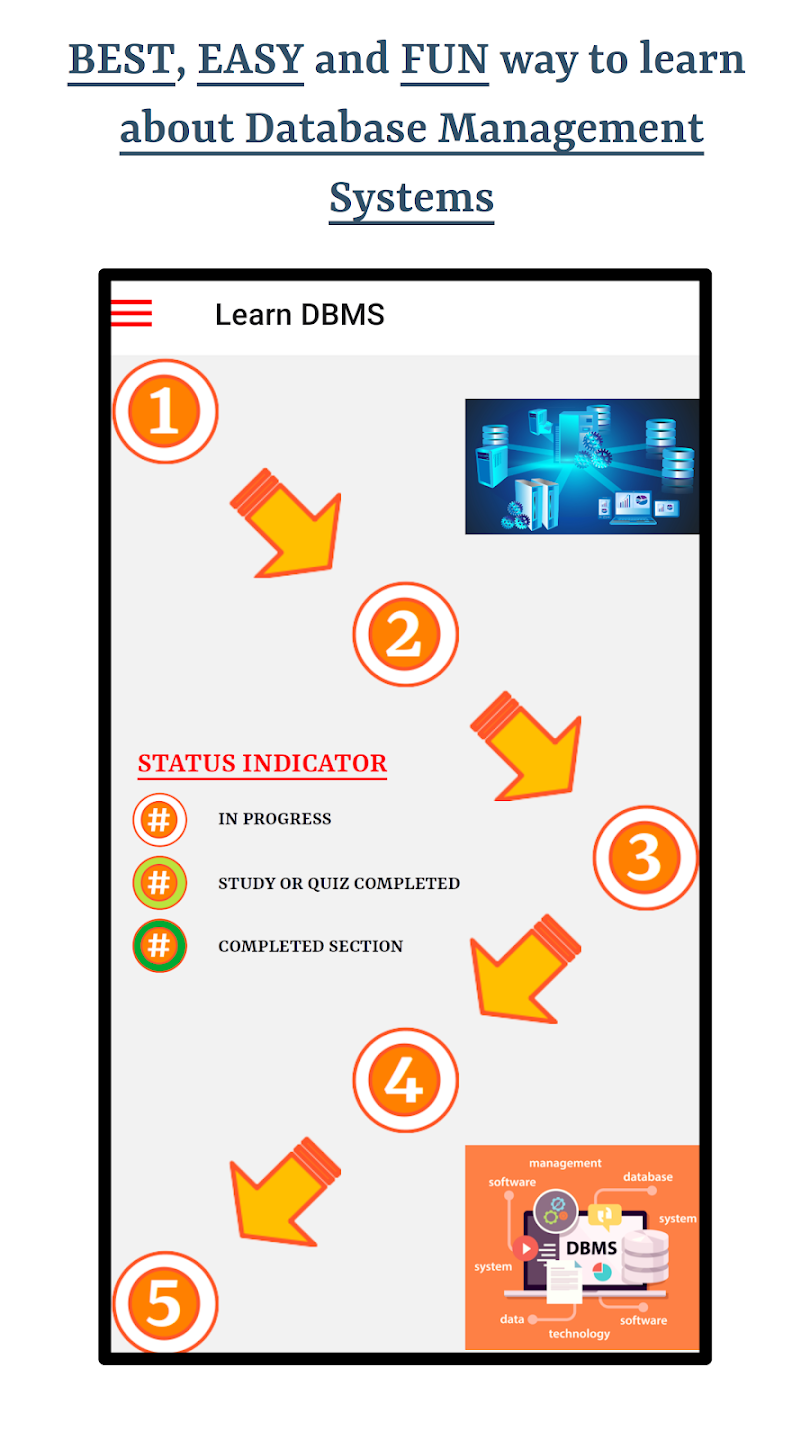
Database Management System is an educational software designed for users who want to learn database management systems. It not only provides detailed teaching materials and corresponding quizzes, but also tracks users' learning progress in real time and adjusts the learning plan accordingly. Users can leave comments and bookmarks at any time for easy review and revisiting. The courses in the software are organized by chapter, and users can easily access the corresponding chapter and begin their learning journey with a simple click. The tutorials in the software are constantly being updated, and more practical tutorials are being released continuously, so stay tuned!
Relational Database Management System: This is a kind of DBMS based on the relational model of data. Relational databases are sometimes referred to as SQL databases, after the coding language (Structured Query Language) used to program most relational database management software.A relational database essentially draws connections between tables or spreadsheets, within a database. As data is added to a database, simply adding columns to the same table would create a static and inflexible data set; over time, your database would become confusing and unhelpful. But in a relational database, tables must have a primary key column which uniquely identifies all data in the row. Tables can then use a foreign key to link to the primary key of another table.One of the big advantages of relational databases is Atomicity, Consistency, Isolation, and Durability (ACID) compliance. The term ACID was coined by computer scientists in the 80s to describe how database transactions must proceed to preserve data integrity. ACID compliance is still considered the standard for ensuring databases are valid even when disruptions like errors and power failures happen, and is a must for databases containing sensitive or regulated information.
NoSQL Database Management System: Non-relational databases are called NoSQL. They’re much less structured than relatable databases, and are document-centered, rather than table-centered. Data in NoSQL databases doesn’t have to fit into well-defined rows and columns. Many NoSQL databases are similar to file folders. This makes it much better for large and irregular collections of data, but also demands much more time and processing power.NoSQL databases management systems are generally classified as one of four types:
Key-Value: As the name suggests, a key-value database stores combinations of keys and values. It might look like a spreadsheet with only two columns. Riak and Redis are two common examples.
Wide-Column Stores: Wide-column store databases are column-oriented, as opposed to most databases (like relational databases) which are row-oriented. This has meaningful implications for the organization of data. While wide-column stores might organize data by a key like other databases, the information attached to this key doesn’t have to be as structured or regular. Examples include Cassandra and HBase.
Graph: A graph database treats data as “nodes” and connections as “edges” between those nodes. These databases are (or can be) represented visually as graphs. Graph databases are used by most social networks and almost any website with “recommendations” based on your behavior. For example, Netflix’s recommendations come from a graph database. HyperGraphDB is one example of this type.
Document Store: Document stores are similar to key-value because they consist of keys with each corresponding to a document. However, those documents can contain immense complexity and don’t have to correspond with the structure of data contained within any of the other documents. MongoDB is an example of this.
In-Memory Databases: A type of increasingly popular database over the last decade is in-memory, abbreviated as IMDB or MMDB (for Main Memory Database System). These databases store data on RAM, providing extreme speed for compressed, unstructured data, but also somewhat less security during disruptions (although advances have addressed this). Due to their speed, MMDBs are popular for telecommunications and mobile advertising.
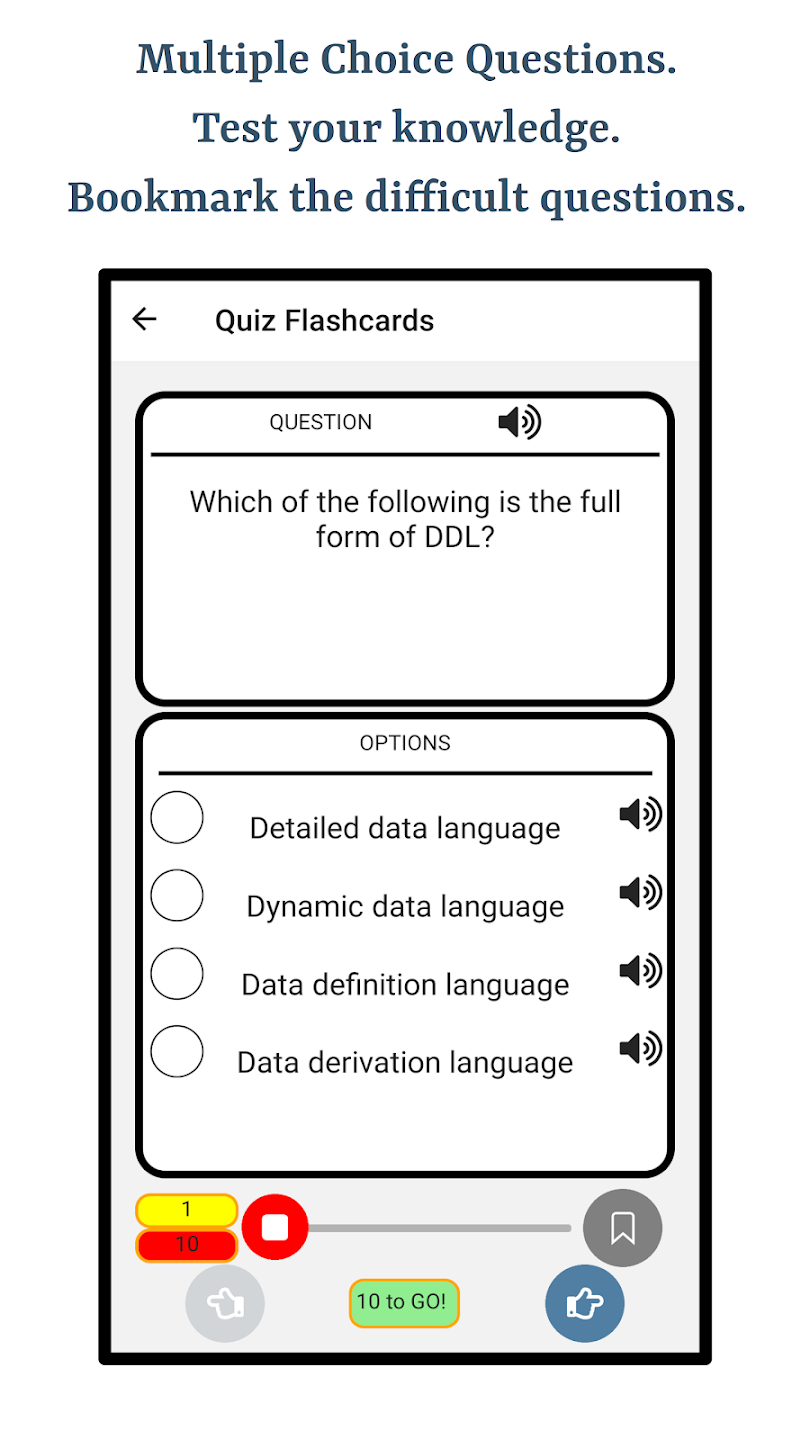
Progress Indicators are added.
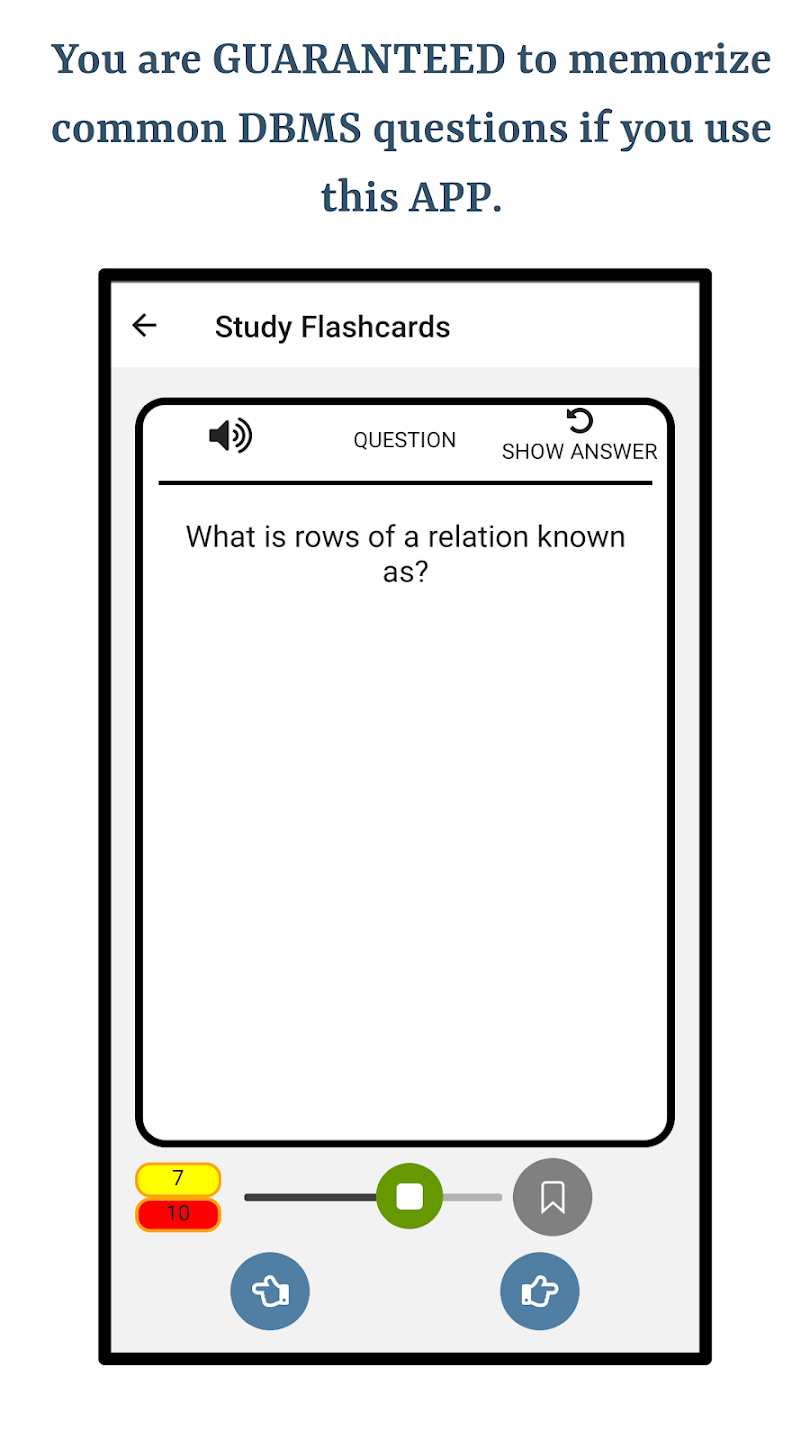
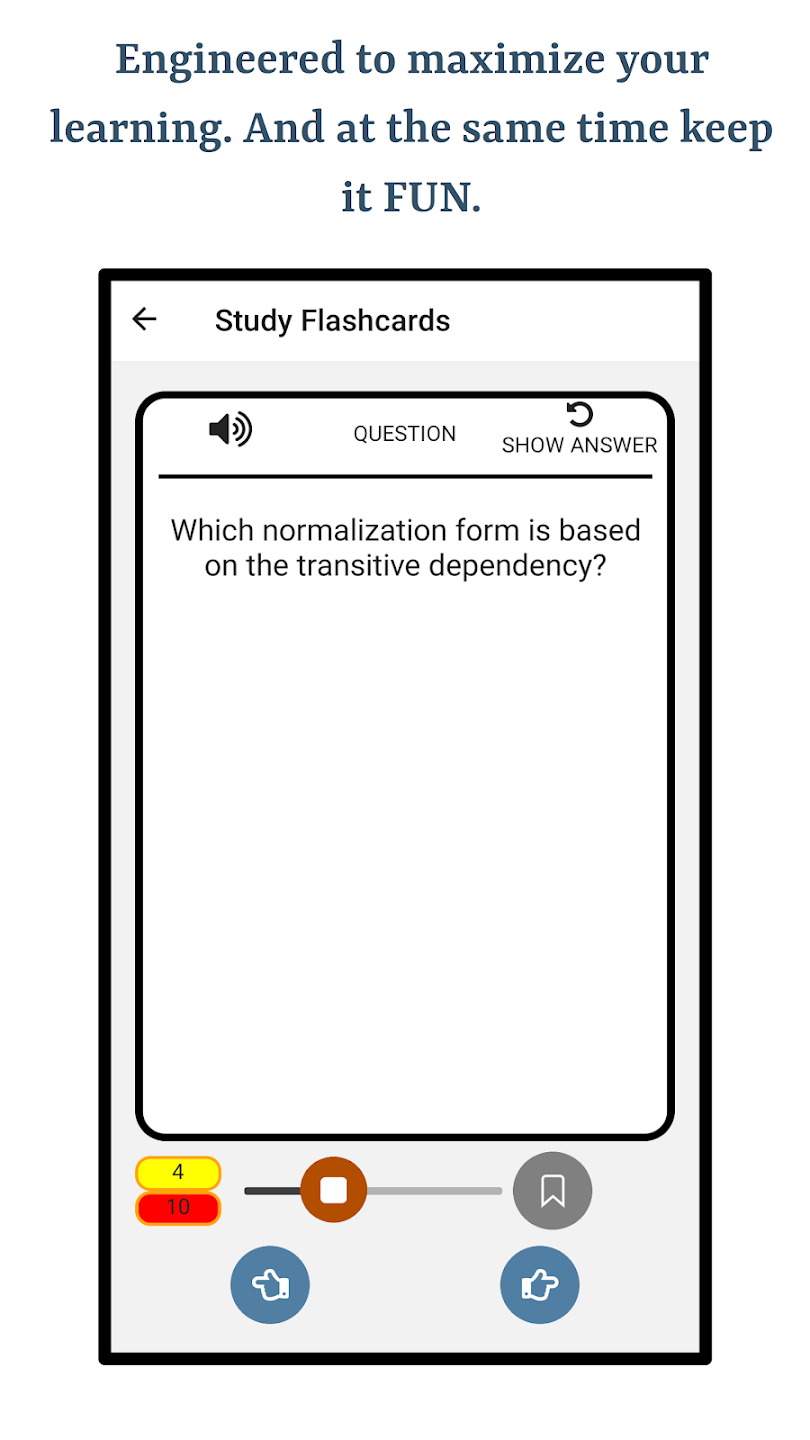
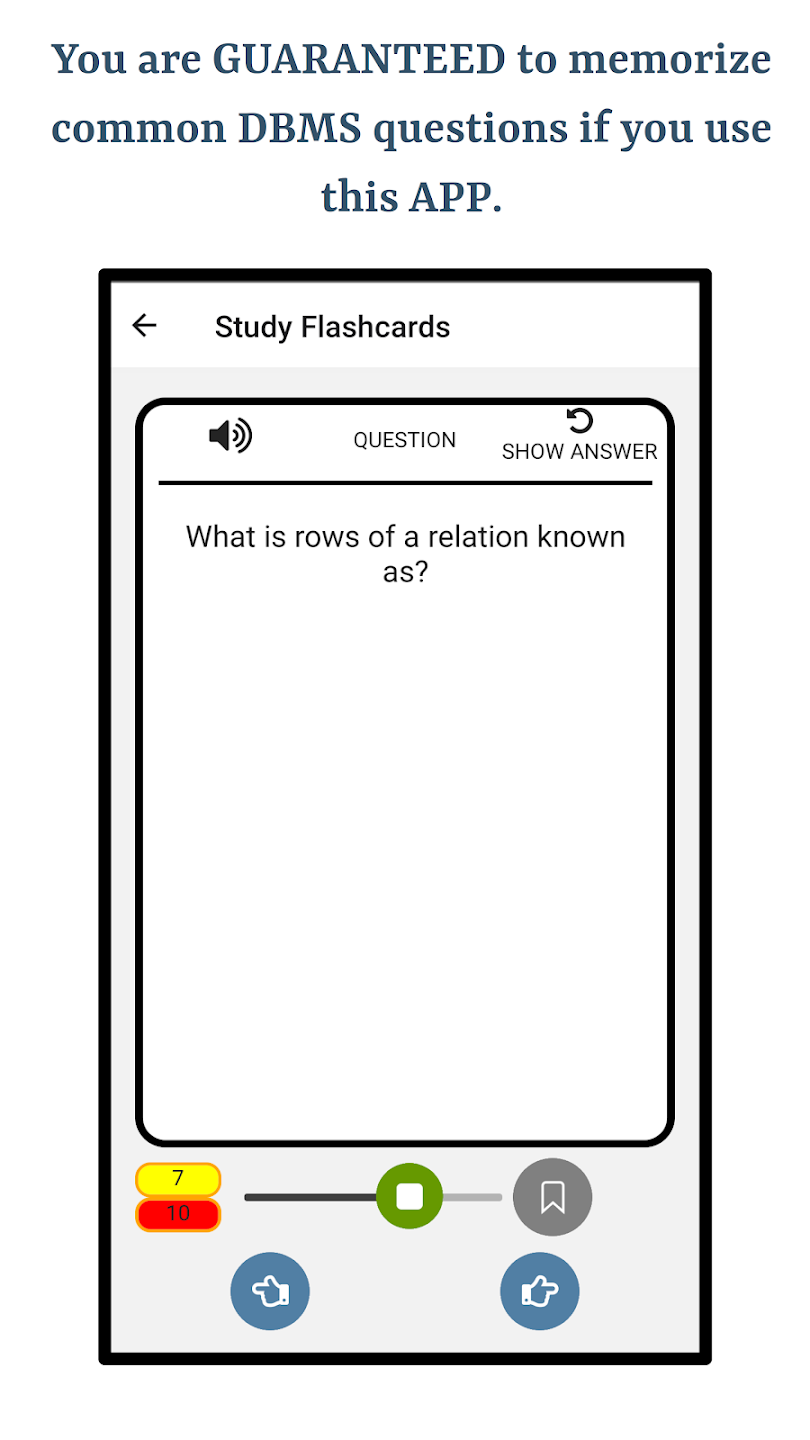
Study Mode is added.
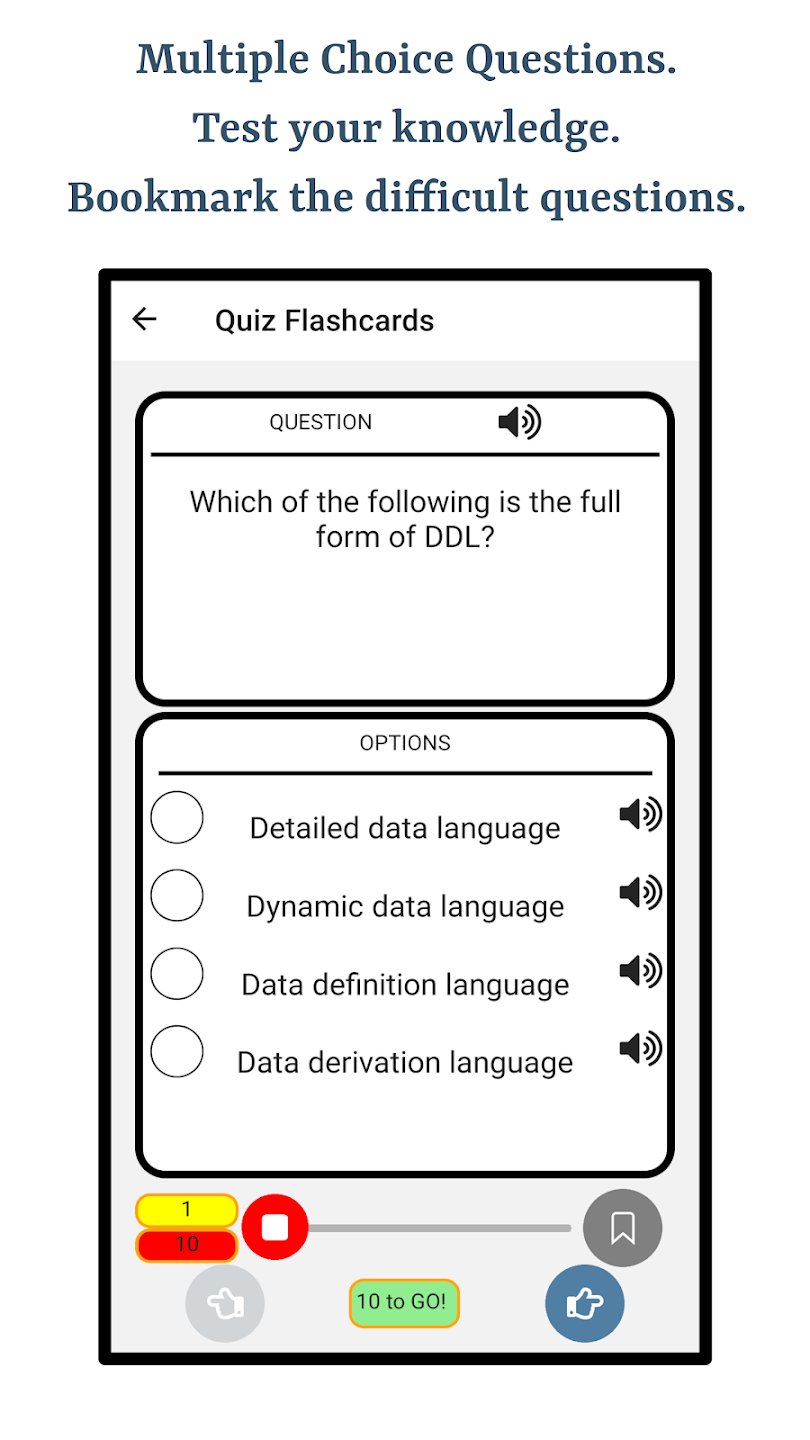
Quiz Mode is added.
Bookmarking is available.
Ability to play the sound for text is available.
Added All Bookmarks Tab in the Menu items.
Bug Fix for Text To Speech issue.
Fixed app name in About Us screen.
Changed hamburger menu icon.
Removed menu icon from all screens except Home.
Size:31.1MB Version:1.85
Requirements:Android Votes:334
Package Name:com.ghummantech.learndbms Signature:463284e02523ff842755a750f1902889942a78b8

Educational software are emerging in an endless stream on the market, so which one can stand out? It should not only be simple and convenient to use but also helpful for our study. Below, Xiaohei.com brings you a very comprehensive and practical summary of educational software downloads. Come and download it, there is always one that suits you.
About us | Contact us | Privacy policy| DMCA
Copyright © 2026 Xiaohei All rights reserved.